AI is increasingly being adopted by distribution businesses to support management and commercial operations. However, AI only creates real value when it is applied to clearly defined business challenges, backed by reliable data, and guided by measurable objectives. With Xspire Business Platform, businesses can integrate AI into distribution operations and make better use of their operational data. This article explores how to adopt AI strategically to generate tangible business value.
According to McKinsey’s The State of AI in 2026 survey, 89% of organizations regularly use AI in at least one business function. However, only around 6% qualify as high performers, with AI contributing at least 5% to earnings before interest and taxes (EBIT) and generating significant business value.
The gap between AI adoption and tangible business value remains substantial. In the distribution industry, this is often driven by three key factors:
Operational efficiency and financial impact should be assessed separately. For example, AI may reduce the time required to consolidate reports, but its business value is only demonstrated when it helps reduce out-of-stock rates, sustain sales, or improve inventory allocation.
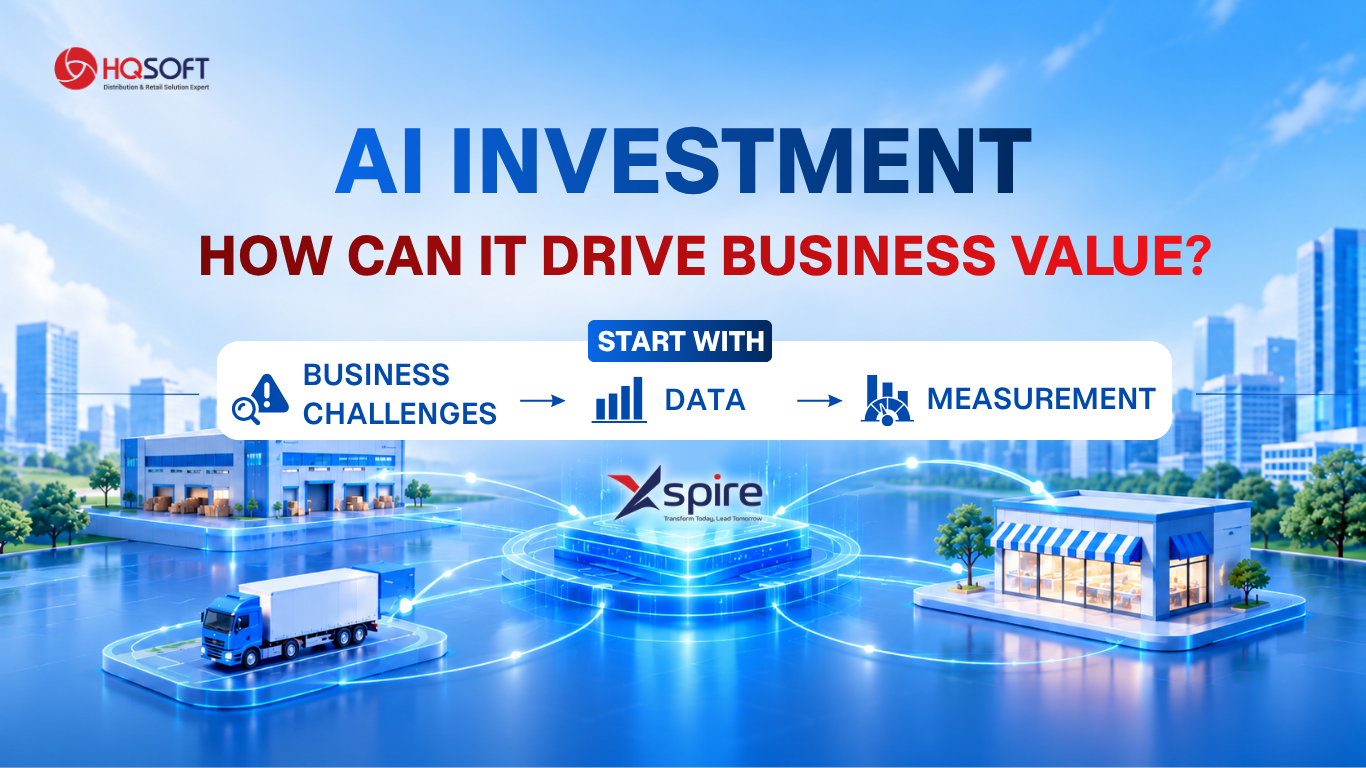
To generate tangible value, businesses should adopt AI in phases, starting with priority operational areas and expanding based on measured results.
Step 1: Identify Priority Business Challenges and KPIs
Select operational areas facing significant challenges or directly affecting business performance, such as demand forecasting, inventory control, or sales route optimization. At the same time, establish specific KPIs to define the outcomes that need to improve.
How Xspire supports this: Connects operational data to help identify business challenges and determine the appropriate scope for AI adoption.
Step 2: Standardize and Centralize Data
Review and standardize product codes, customer information, distributor records, and data-entry practices across departments. Connect order, inventory, sales, and financial data to minimize duplication and inconsistencies.
How Xspire supports this: Centralizes data and connects business processes on a unified platform, establishing a consistent information base for analysis.
Step 3: Pilot AI Applications Within a Controlled Scope
Start with a specific region, product category, or business process. Compare AI-generated results with existing management methods to assess improvements, identify discrepancies, and make adjustments before scaling up.
How Xspire supports this: Provides operational data and APIs, creating the foundation for integrating AI applications suited to business requirements.
Step 4: Measure Results and Determine the Next Stage of Expansion
Monitor established KPIs and compare performance before and after AI implementation. If metrics such as out-of-stock rates, inventory turnover, operating costs, or profit margins improve, businesses have a measurable basis for expanding AI adoption into other operational areas.
How Xspire supports this: Provides management reports and performance metrics to support evaluation and informed decisions on further implementation.
To integrate AI into business operations, companies need a platform that connects data, supports operational workflows, and maintains appropriate controls throughout the decision-making process.
With Xspire, businesses can leverage data and apply AI across three key areas:
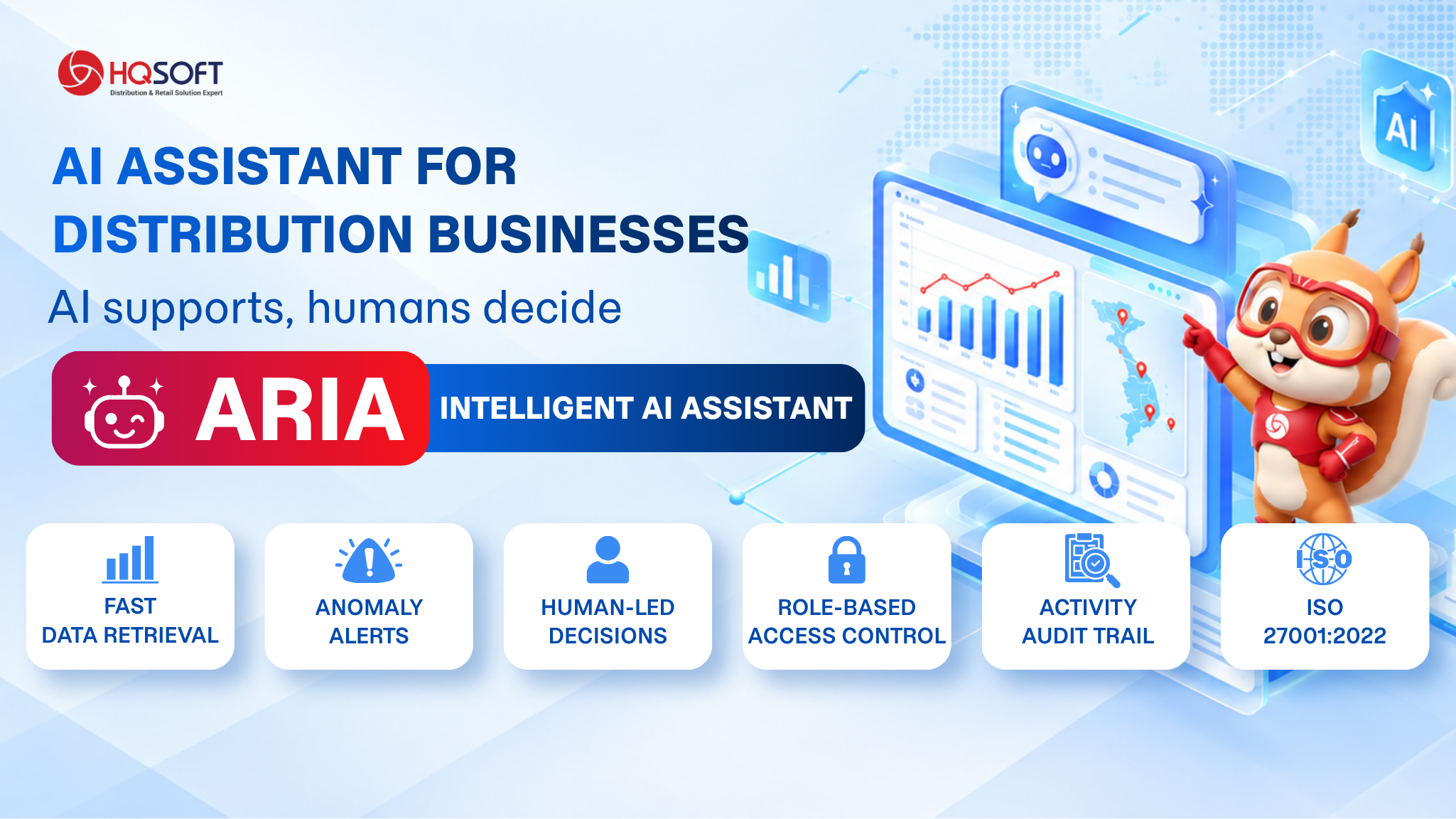
Within this ecosystem, Aria is an AI assistant integrated directly into Xspire, helping users retrieve information and interact with operational data. Learn more about Aria – the AI assistant for distribution businesses.
AI does not automatically improve business performance simply because a company has implemented the technology. Tangible value depends on selecting the right business challenges, preparing reliable data, conducting controlled pilots, and measuring outcomes against relevant performance indicators.
In distribution, this can begin with specific operational tasks, such as consolidating sell-out reports, identifying potential stock shortages, or improving field visit effectiveness. Once the results have been validated, businesses have a stronger basis for deciding whether to expand their AI applications.
HQSOFT’s Xspire Business Platform connects sell-in, sell-out, and distribution operations on a unified platform, providing the foundation for businesses to leverage operational data and progressively adopt AI in line with their actual needs.
Contact HQSOFT for a consultation to explore Xspire and develop an AI adoption roadmap aligned with your business objectives.
Read more from McKinsey & Company: The State of AI in 2026: On the Road to ROI: https://www.mckinsey.com/capabilities/quantumblack/our-insights/the-state-of-ai
 Tags:
related posts
Top news